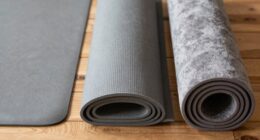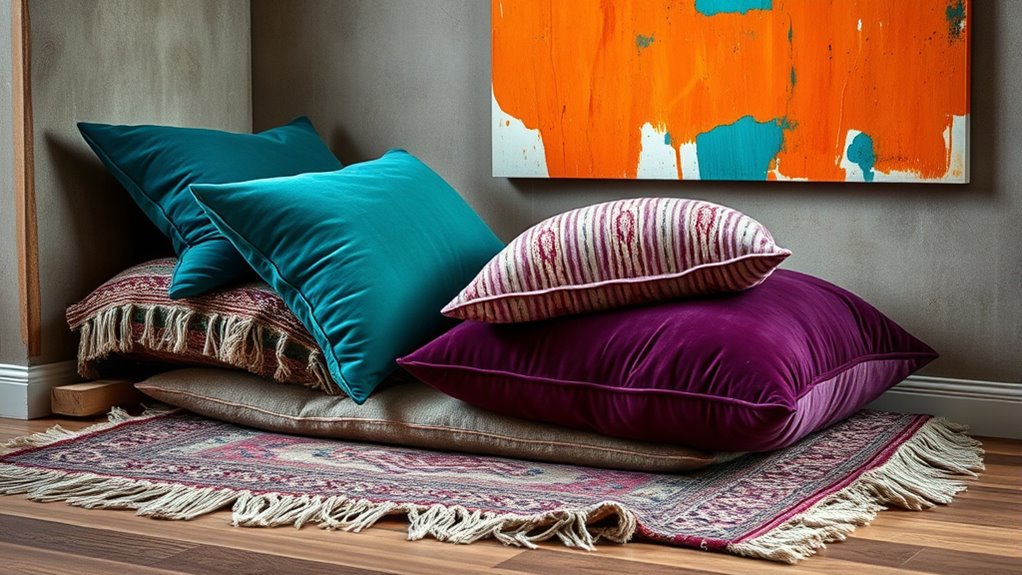

To pile on the texture, layer bold patterned rugs, plush pillows, and tactile wall art to add depth and personality to your space. Mix various textures like velvet, woven materials, and textured hangings, while coordinating patterns and colors for harmony. Keep things lively but balanced by ensuring your layers complement each other without clutter. Want to discover how to master this stylish approach? Keep exploring to uncover more tips for creating a vibrant, inviting room.
Key Takeaways
- Incorporate a mix of textured rugs, plush pillows, and wall hangings to add tactile richness and visual depth.
- Use contrasting textures like velvet, woven, and shag to create dynamic, layered surfaces.
- Coordinate colors across rugs, pillows, and wall art to unify textures and enhance cohesion.
- Vary pattern sizes and textures to prevent visual clutter and maintain balanced interest.
- Select elements that complement each other without overwhelming the space for a harmonious layered look.
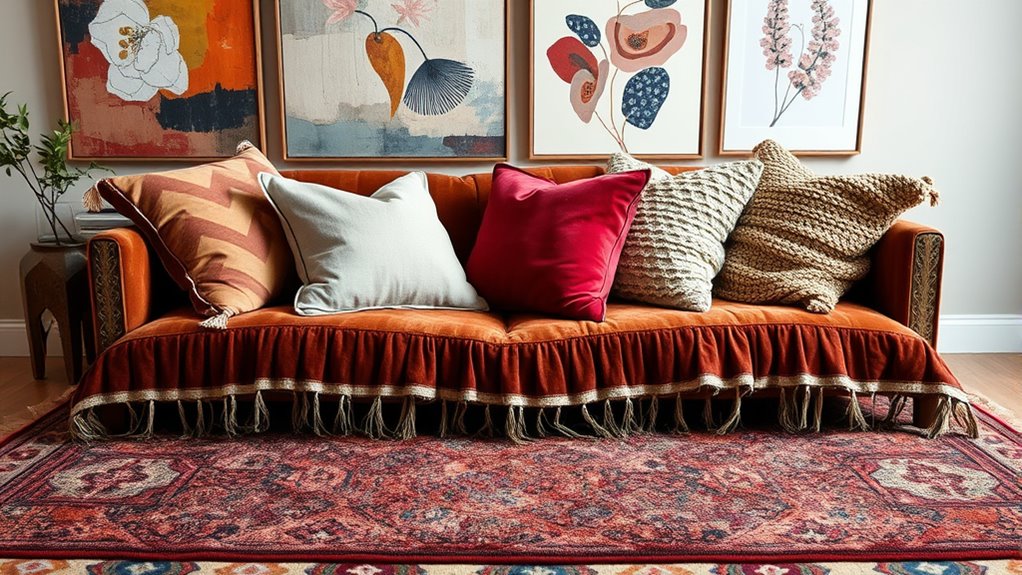
Have you ever wondered how rugs, pillows, and wall art can transform a room from ordinary to extraordinary? It’s all about adding texture and personality, and one of the most effective ways to do that is through layered patterns and thoughtful color coordination. When you combine these elements intentionally, your space becomes more dynamic and inviting, instantly catching the eye and making a statement.
Start with your rug, which serves as the foundation of your layered look. Choose one with a bold pattern or interesting texture that complements the overall color scheme of your room. Layered patterns play a vital role here—they create visual interest and depth. For example, if your walls are painted in neutral tones, a rug with intricate geometric or floral designs in contrasting colors can anchor your space and set the tone. When selecting pillows and wall art, consider echoing or contrasting these patterns. For instance, if your rug features organic shapes or vibrant hues, pick pillows with similar motifs or complementary colors to reinforce the theme, enhancing cohesion without overwhelming the senses.
Begin with a patterned or textured rug that complements your wall colors to create depth and visual interest.
Color coordination is key to making these layers work seamlessly. You don’t need everything to match perfectly, but ensuring your pillows, wall art, and other accessories share a common color palette creates harmony. Think of your room as a canvas, and use color to tie all elements together. If your wall art has shades of blue and gold, incorporate these colors into your pillows and even the rug if possible. This approach keeps your space unified and prevents it from feeling cluttered or chaotic. Conversely, if you prefer a more eclectic look, use contrasting colors intentionally—bright pillows against a muted wall art piece can add vibrancy and energy, as long as the hues are balanced and deliberate.
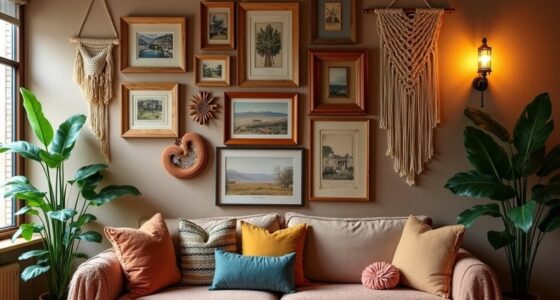
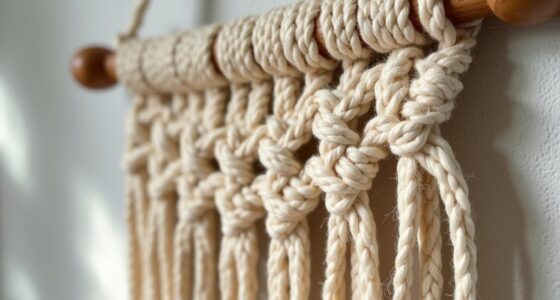
Layered patterns are most impactful when they’re varied but not conflicting. Mix different textures—think velvet pillows, woven throws, and textured wall hangings—to create a rich tapestry of tactile interest. When you combine this with well-coordinated colors, you craft a space that feels curated and intentional. Remember, the goal is to draw the eye around the room, guiding it from one layer to the next. By thoughtfully selecting patterned and colored elements, you emphasize depth and personality, making your space feel lively and welcoming. Exploring texture mixing techniques can further elevate your design.
Ultimately, mastering layered patterns and color coordination allows you to pile on texture with confidence. Every piece you add should enhance the overall aesthetic, making your room feel thoughtfully designed rather than cluttered. When done right, your space will become a true reflection of your style—vibrant, harmonious, and full of character.
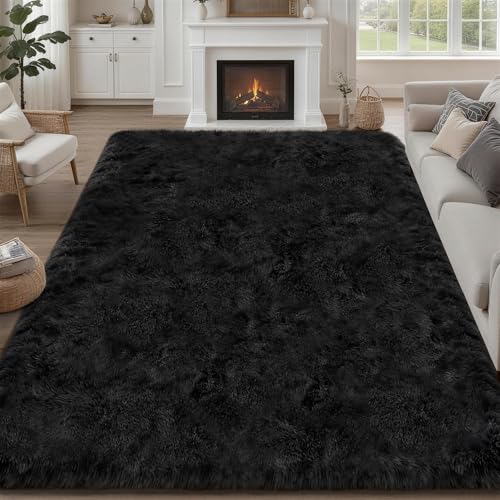
Luxturiy 8×10 Area Rug Living Room Bedroom: Fluffy Plush Shag Carpet Black
- Ultra Soft Microfiber Pile: 1.4-inch plush, long-lasting softness
- High-Density Memory Foam Layer: Enhances comfort and reduces noise
- Non-Slip Backing: Ensures safety and stability
As an affiliate, we earn on qualifying purchases.
As an affiliate, we earn on qualifying purchases.
Frequently Asked Questions
How Do I Clean and Maintain Textured Rugs and Pillows?
To keep your textured rugs and pillows looking great, vacuum regularly using gentle, overlapping techniques to lift dirt without damaging fibers. For stains, act quickly with stain removal methods like blotting with a clean cloth and using mild cleaning solutions suited for delicate textures. Avoid harsh scrubbing, and always check care labels. Regular maintenance keeps your textured pieces fresh, vibrant, and inviting.
Which Textures Complement Each Other Best in a Room?
You should pair textures that create engaging contrasts, like soft velvet with rough burlap or sleek leather with woven linen. Material pairings work best when they balance each other, adding depth without overwhelming the space. Aim for a mix of smooth and textured surfaces, such as plush pillows alongside textured wall art or a shaggy rug with smooth furniture. This contrast enhances visual interest and makes your room feel inviting and dynamic.
Can Wall Art Add Texture Without Overwhelming the Space?
A touch of textured wall art can subtly enhance your space without overwhelming it. By choosing pieces with textured wall art, you add visual depth and tactile interest that invites curiosity. Opt for artwork with varied materials or layered elements to create a sophisticated look. This approach gently enriches your room’s ambiance, making it feel inviting and personalized without competing with other textures or cluttering the visual flow.
What Are the Best Materials for Durable, Textured Home Decor?
For durable, textured home decor, you should choose natural fibers like jute, sisal, or hemp—they add rich texture and are eco-friendly. Water-resistant materials such as treated canvas or outdoor-grade fabrics also stand up well to wear and tear. These options combine durability with tactile interest, making them perfect for high-traffic areas or spaces prone to moisture, ensuring your decor stays stylish and resilient over time.
How Do I Layer Different Textures for a Cohesive Look?
Imagine walking into a space where every element feels just right—you’ve achieved this by mixing textiles thoughtfully. To layer textures for visual harmony, start with a neutral base, then add rugs, pillows, and wall art in varied materials like velvet, woven fibers, and linen. Balance soft and rough textures, and repeat colors subtly. This creates a cozy, inviting atmosphere where every piece complements, making your decor feel both intentional and effortlessly stylish.
Conclusion
By layering rugs, pillows, and wall art, you’re weaving a vibrant tapestry that breathes life into your space. Think of it as painting with texture—each piece adding depth and personality. When you pile on these elements, your home transforms into a cozy, inviting haven, like a warm embrace waiting to be explored. So go ahead, sprinkle your style generously and let your decor tell a story as rich and inviting as a well-worn blanket.