
Installing a rainwater harvesting system in your boho home is a stylish way to boost sustainability while enhancing your unique decor. Begin by evaluating your roof and placing reclaimed wood barrels beneath your downspouts for easy access and visual appeal. Incorporate eco-friendly piping and decorative elements like painted or mosaic accessories. Regular maintenance and simple filtration keep the water clean. If you keep exploring, you’ll discover how to create a beautiful, functional system that reflects your eco-conscious lifestyle.
Key Takeaways
- Assess roof size and material to optimize water collection potential.
- Choose reclaimed or recycled materials for barrels and piping to ensure eco-friendliness.
- Position barrels beneath downspouts, incorporating decorative elements to match boho aesthetics.
- Integrate simple filtration and regular maintenance for water quality and system longevity.
- Design the system as a visually appealing, sustainable feature that complements your boho decor.
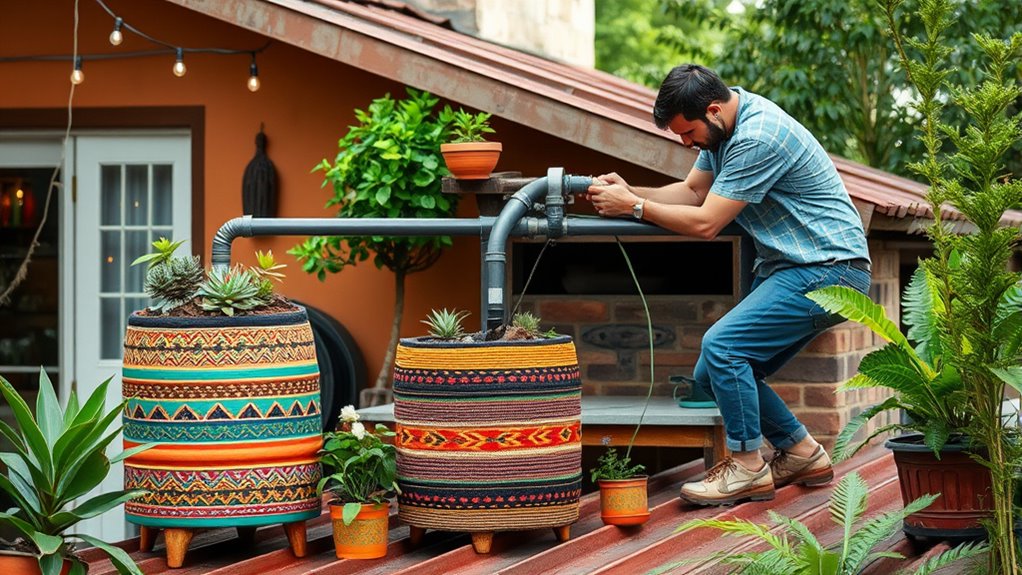
Rainwater harvesting has become a popular feature in boho homes, blending eco-friendly practices with creative design. As you consider installing a rainwater harvesting system, you tap into a sustainable approach that aligns with the free-spirited and environmentally conscious ethos of boho living. This system not only reduces reliance on municipal water sources but also enhances your home’s overall sustainability. When selecting materials and designing your setup, prioritize eco-friendly materials that complement your aesthetic and minimize environmental impact. Think about using reclaimed wood for the collection barrels, recycled metal for the piping, or biodegradable sealants that won’t harm the environment. These choices reflect your commitment to sustainable design while adding unique, handcrafted touches that fit seamlessly into your boho decor.
Installing a rainwater harvesting system requires thoughtful planning. First, assess your roof’s size and material to determine how much water you can collect. You’ll want to position your collection barrels beneath downspouts, ensuring they’re accessible yet visually appealing. Incorporate decorative elements, like painted or mosaic-covered barrels, to make them focal points rather than purely functional items. Connecting your system to eco-friendly materials ensures that every component, from the gutters to the storage tanks, aligns with your sustainable goals. Remember to include a simple filtration system to keep debris out and maintain water quality. This not only preserves the integrity of your plants but also supports eco-friendly living practices. Additionally, understanding relationships – personality test can help you create a more harmonious environment by considering how your design choices influence your personal well-being and interactions.
Maintenance is straightforward but essential; regularly check for leaks, clean filters, and ensure your storage tanks stay free of algae. Incorporating natural elements like plants around the system can help integrate it into your boho landscape, turning it into a charming feature. You might also consider adding a drip irrigation system that uses harvested rainwater to water your garden, further reducing your reliance on tap water. Such integrations not only promote sustainability but also add to your home’s eclectic, natural vibe. With a little creativity, your rainwater harvesting system becomes more than just an eco-friendly utility — it transforms into a visual statement of your commitment to sustainable design.

FCMP Outdoor Slim Line Design 45-Gallon Wood Grain Outdoor Home Rain Water Catcher Barrel Flat Back Container with Spigots and Mesh Screen, Brown
- Slim-line design: Ideal for small outdoor spaces
- Flat back installation: Easy to install against walls
- Side spigots: Connect multiple barrels easily
As an affiliate, we earn on qualifying purchases.
As an affiliate, we earn on qualifying purchases.
Frequently Asked Questions
What Are the Initial Costs of Installing a Rainwater Harvesting System?
The initial costs of installing a rainwater harvesting system typically range from $1,000 to $5,000, depending on your system size and complexity. You should do a thorough cost estimation and budget planning to cover components like gutters, storage tanks, filters, and pumps. Keep in mind that investing upfront can reduce water bills long-term, making it a worthwhile addition to your boho home’s eco-friendly lifestyle.
How Much Maintenance Does a Rainwater Harvesting System Require?
You might wonder how much effort a rainwater harvesting system needs. It’s not too demanding, but regular system cleaning keeps it running smoothly. You’ll need to check and clean filters periodically, replacing them when necessary. Occasional inspections ensure no debris or pests compromise water quality. With just a bit of routine care, your system stays efficient, providing safe water while giving you peace of mind — just enough to keep you connected to your sustainable lifestyle.
Are There Legal Restrictions for Rainwater Harvesting in Boho Neighborhoods?
Yes, there are legal restrictions for rainwater harvesting in boho neighborhoods. You should check local laws and neighborhood regulations to see if you need legal permits before installing a system. Some areas have restrictions to ensure water rights or prevent overuse. To avoid issues, always research your specific location’s rules, and obtain necessary permits if required. This way, you stay compliant and enjoy your rainwater harvesting system hassle-free.
What Are the Best Materials for Rainwater Collection in Boho Homes?
Think of your rainwater harvesting system as a sturdy vessel; stainless steel and high-density polyethylene are your best materials. They’re durable, resistant to corrosion, and safe for rainwater filtration. These storage tank materials keep your water pure and prevent contamination. Plus, they blend naturally with boho aesthetics. Choosing the right materials guarantees your system works efficiently and lasts long, transforming rain into a sustainable resource effortlessly.
How Can I Maximize Rainwater Collection Efficiency in My Design?
To maximize rainwater collection efficiency, focus on optimizing your gutter design to direct more water into your system. Incorporate effective rainwater filtration to keep debris out and improve water quality. Regularly clean and maintain gutters, ensure proper slope, and use wide downspouts. These steps will enhance flow, prevent blockages, and boost overall efficiency, helping you make the most of every rainfall for your boho home.
Conclusion
Embracing rainwater harvesting in your boho home bridges simplicity and sustainability. While your eclectic décor reflects free-spirited individuality, installing a system grounds you in eco-conscious living. This blend of art and function transforms your space into a sanctuary that nurtures both style and the environment. By capturing rain, you not only honor nature’s rhythm but also create a harmonious haven—proof that even the most carefree homes can make a meaningful impact on the planet.