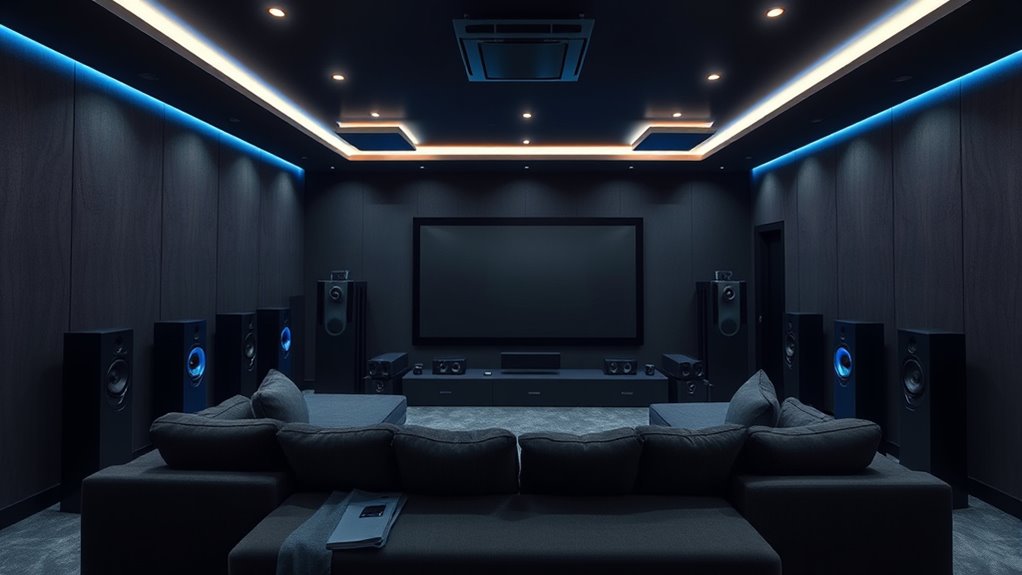

Dolby Atmos speakers come in more shapes than most buyers expect: up-firing add-on modules, full surround sets, soundbars, and standalone smart speakers all claim the same height-effect magic, but they deliver very different results. For a dedicated home theater, my top overall pick is the Klipsch RP-500SA II, because its horn-loaded up-firing drivers and premium cabinet create the most convincing overhead effects in the lineup. If you want Atmos without the receiver and wiring, the Sonos Beam Gen 2 is the strongest compact soundbar choice, while the Amazon Echo Studio is the easiest entry point for streaming Atmos music. The main tradeoff you’ll face is ceiling-bounced height effects versus true in-ceiling channels — and whether you already own an AV receiver, which shapes the whole decision. Keep reading for the full breakdown of all 13 options, sorted by role and budget.

Get your wardrobe favorites delivered free with Prime
- Fast, free delivery on millions of items
- Prime Video, Amazon Music and more included
- Member-only deals all year
Key Takeaways
- Dedicated up-firing modules (Klipsch RP-500SA II, RP-500SA, Sony SS-CSEM2) clearly outperformed soundbars and smart speakers for overhead precision — but they only make sense if you already own or plan to buy an AV receiver.
- Four of the 13 products are Klipsch models spanning roughly three price tiers, which makes Klipsch the default brand here; the RP-500SA II and RP-500SA separated themselves from the cheaper R-40SA and R-41SA mainly through cabinet build and height-driver refinement.
- The comparison revealed that your ceiling is the hidden variable: up-firing speakers bounce sound off a flat, reflective ceiling, so buyers with vaulted, angled, or acoustic-tile ceilings should favor the soundbar and smart-speaker picks instead.
- All-in-one systems (the 5.1.4 flagship system, ULTIMEA Poseidon M60) trade long-term upgrade flexibility for simplicity — they’re the fastest route to full Atmos but lock you into one manufacturer’s ecosystem.
- The Polk Monitor XT90 emerged as the value sweet spot for height modules: it delivers a noticeably better sense of vertical space than entry-tier rivals at a friendlier commitment level than the Reference Premiere line.
| Klipsch R-41SA Powerful Detailed Home Speaker Set of 2 Black |  | Best Budget Atmos Add-On | Speaker Type: Dolby Atmos elevation / surround (pair) | Tweeter: 1″ LTS aluminum with Tractrix horn | Woofer: Spun copper Injection Molded Graphite (IMG) | VIEW ON AMAZON | See Our Full Breakdown |
| Klipsch Reference Premiere RP-500SA Dolby Atmos Surround Speakers (Pair, Ebony) |  | Best Premium Atmos Modules | Tweeter: 1″ titanium LTS vented with hybrid Tractrix horn | Woofer: 5.25″ spun copper cerametallic | Output Wattage: 75 watts | VIEW ON AMAZON | See Our Full Breakdown |
| HiMuses M514 Flagship True 5.1.4 Hi-Fi Dolby Atmos Surround Sound System with Subwoofer |  | Best Complete Atmos System | Configuration: True 5.1.4 channel Dolby Atmos | Peak Power: 900 watts | Height Channels: 4 dedicated up-firing drivers | VIEW ON AMAZON | See Our Full Breakdown |
| Sonos Beam Gen 2 (Black) – Soundbar with Dolby Atmos |  | Best Compact Soundbar Pick | Audio Technology: Dolby Atmos (virtualized height) | Color: Black | Connectivity: HDMI eARC, Apple AirPlay 2, Sonos app, TV remote, voice | VIEW ON AMAZON | See Our Full Breakdown |
| Polk Audio Monitor XT90 Height Speaker Pair for 3D Sound, Midnight Black |  | Best for Polk Monitor Owners | Speaker Type: Dolby Atmos height module (pair) | Woofer: 4″ Dynamically Balanced | Format Support: Dolby Atmos, DTS:X, DTS Virtual:X | VIEW ON AMAZON | See Our Full Breakdown |
| Sonos Era 300 Wireless Smart Speaker with Dolby Atmos – Black |  | Best Wireless Atmos Speaker | Driver Configuration: Six drivers: front, side, and upfiring positions | Audio Format: Dolby Atmos Music, stereo, multichannel surround (when paired) | Connectivity: Wi-Fi, Bluetooth, Line-In (via Sonos adapter) | VIEW ON AMAZON | See Our Full Breakdown |
| Klipsch Reference Premiere RP-500SA II Ebony Surround Sound Speakers |  | Best Premium Atmos Add-On Modules | Type: Passive Dolby Atmos elevation / surround module (pair) | Horn: 90° x 90° silicone composite hybrid Tractrix | Tweeter: 1″ LTS titanium diaphragm, vented housing | VIEW ON AMAZON | See Our Full Breakdown |
| Sony SS-CSEM2 Dolby Atmos Enabled Upfiring Height Speakers (Pair) |  | Best Budget Height Modules | Type: Dolby Atmos enabled upfiring speaker (pair) | Driver: 3.94 in. full-range with reinforced cellular cone | Frequency Response: 70 Hz and up | VIEW ON AMAZON | See Our Full Breakdown |
| ULTIMEA Poseidon M60 5.1CH Surround Sound Bar System with Dolby Atmos |  | Best Value Atmos Soundbar System | Channels: 5.1 with Dolby Atmos | Peak Power: 300W | Frequency Response: 45 Hz – 18 kHz | VIEW ON AMAZON | See Our Full Breakdown |
| TCL S45H 2.0 Sound Bar with Dolby Atmos & DTS Virtual:X |  | Best Budget Compact Soundbar | Channels: 2.0 | Total Power: 100W | Audio Formats: Dolby Atmos, DTS Virtual:X | VIEW ON AMAZON | See Our Full Breakdown |
| Klipsch Reference Next Generation R-40SA Dolby Atmos Elevation Surround Speaker Pair |  | Best Add-On Atmos Modules for Existing Klipsch Systems | Speaker Type: Dolby Atmos enabled elevation / surround module (pair) | Tweeter: 1″ LTS aluminum with Kapton suspension | Woofer: 4″ spun-copper thermoplymer crystalline polymer (TCP) | VIEW ON AMAZON | See Our Full Breakdown |
| Klipsch RP-140SA Dolby Atmos Elevation Speaker |  | Best Budget Route into Reference Premiere Sound | Speaker Type: Dolby Atmos enabled elevation module | Series: Reference Premiere | Woofer: 4″ copper-spun IMG woofer | VIEW ON AMAZON | See Our Full Breakdown |
| Amazon Echo Studio (newest model), Graphite |  | Best Compact Smart Speaker for Casual Atmos | Speaker Type: Smart speaker with spatial audio and Dolby Atmos | Size: 40% smaller than original Echo Studio | Audio Features: Room adaptation, immersive spatial audio, powerful bass | VIEW ON AMAZON | See Our Full Breakdown |
More Details on Our Top Picks
Klipsch R-41SA Powerful Detailed Home Speaker Set of 2 Black
For shoppers who already own a solid pair of bookshelf or tower speakers and want real Dolby Atmos height effects without a big spend, this pair is the most sensible entry point. The Tractrix horn-loaded LTS tweeter gives the R-41SA a lively, forward character that Klipsch is known for, and the spun copper IMG woofer keeps the cabinet compact enough to perch on most towers. Compared with the Polk Monitor XT90, the Klipsch pair relies on a smaller 4-inch class driver but compensates with horn efficiency, so it plays louder from modest amplification. The tradeoff is refinement: step up to the Klipsch RP-500SA and you get a titanium tweeter, a bigger woofer, and a switchable crossover the R-41SA simply lacks.
Pros:- Tractrix horn design delivers high sensitivity and dynamic detail
- Compact enough to sit atop most tower speakers
- Reinforced MDF cabinet with magnetic grilles keeps resonance low
- Very high efficiency for its price class
Cons:- No switchable crossover, so it is less flexible than the RP-500SA
- Modest 50W continuous power handling limits headroom in large rooms
Best for: Owners of existing tower or bookshelf speakers who want affordable, horn-loaded Atmos elevation channels
Not ideal for: Listeners building from scratch who need surrounds and a subwoofer — this pair only covers the height layer
- Speaker Type:Dolby Atmos elevation / surround (pair)
- Tweeter:1″ LTS aluminum with Tractrix horn
- Woofer:Spun copper Injection Molded Graphite (IMG)
- Power Handling:50W continuous / 100W peak
- Cabinet:Reinforced MDF with wood grain vinyl
- Grille:Low profile magnetic
- Placement:Atop monitors/towers or as surrounds
Our verdict“A smart, low-risk way to add Atmos height to an existing Klipsch or horn-friendly system without rebuilding your whole setup.”
Klipsch Reference Premiere RP-500SA Dolby Atmos Surround Speakers (Pair, Ebony)
This is the pick for buyers who treat height channels as a long-term investment rather than an afterthought. The 1″ titanium LTS tweeter with hybrid Tractrix horn and 5.25″ cerametallic woofer give the RP-500SA real dynamic range, and the switchable crossover means the same pair can serve as Atmos elevation modules today and dedicated on-wall surrounds later. That dual-role flexibility is what separates it from both the cheaper Klipsch R-41SA and the Polk XT90, neither of which can be re-tasked as easily. The honest tradeoff is cost and commitment: you still need an Atmos-capable receiver with spare amplifier channels, and the ebony finish, while handsome, shows dust more than matte black alternatives.
Pros:- Switchable crossover for Atmos elevation or surround use
- Titanium LTS tweeter and cerametallic woofer for low distortion at volume
- Keyhole mounts enable clean on-wall installation
- Premium scratch-resistant ebony finish
Cons:- Requires an Atmos-capable receiver with available amplifier channels
- Heavier and pricier than entry-level modules like the R-41SA
Best for: Enthusiasts with an Atmos receiver who want one pair that works as both elevation modules and wall-mounted surrounds
Not ideal for: Soundbar shoppers or anyone without extra amplifier channels — these are passive speakers that need proper power
- Tweeter:1″ titanium LTS vented with hybrid Tractrix horn
- Woofer:5.25″ spun copper cerametallic
- Output Wattage:75 watts
- Configuration:Pair
- Finish:Ebony, scratch resistant
- Mounting:Keyhole on-wall mount
- Use Modes:Dolby Atmos elevation or surround (switchable crossover)
Our verdict“The most future-proof Atmos module here — buy once and use it as elevation or surround as your system evolves.”
HiMuses M514 Flagship True 5.1.4 Hi-Fi Dolby Atmos Surround Sound System with Subwoofer
Most options in this roundup solve one piece of the puzzle; the M514 solves all of them at once. With true 5.1.4 channels — a dedicated center, four surrounds, four up-firing height drivers, and a wired subwoofer reaching 25Hz — it delivers genuine object-based Atmos rather than the virtualized processing you get from the Sonos Beam Gen 2. The 16 aluminum-magnesium alloy drivers and independent crossofs in each cabinet give it a level of channel separation a soundbar physically cannot match. The tradeoffs are practical: wired surround and subwoofer connections mean cable runs across the room, and the 900W peak figure assumes a larger room than most apartments can accommodate. Compared with piece-by-piece builds around the RP-500SA, it trades upgrade flexibility for out-of-the-box completeness.
Pros:- True 5.1.4 configuration with four dedicated height channels, not virtualized Atmos
- Dedicated center channel anchors dialogue clearly
- Subwoofer reaches 25Hz for deep, controlled bass
- Handcrafted wooden cabinets reduce resonance and add warmth
Cons:- Wired speakers and subwoofer require cable routing
- Larger footprint than soundbar alternatives like the Sonos Beam Gen 2
Best for: Buyers who want a genuine 5.1.4 Atmos system in one purchase, without matching separate components and receivers
Not ideal for: Apartment dwellers or anyone who dislikes visible cables — wired surrounds and a 13.5L subwoofer demand space and cable management
- Configuration:True 5.1.4 channel Dolby Atmos
- Peak Power:900 watts
- Height Channels:4 dedicated up-firing drivers
- Subwoofer:13.5L wired, reaches 25Hz
- Drivers:16 rose-gold aluminum-magnesium alloy
- Crossovers:Independent per speaker
- Cabinets:Handcrafted wood with soft-touch finish
Our verdict“The one-box answer for buyers who want real discrete Atmos channels and won’t settle for a soundbar’s virtualized height effects.”
Sonos Beam Gen 2 (Black) – Soundbar with Dolby Atmos
Where the Klipsch RP-500SA and HiMuses M514 demand receivers, wiring, and planning, the Beam Gen 2 asks only for two cables and an HDMI port. Its Atmos presentation is virtualized height from a small chassis, so it will not replicate the overhead precision of the M514’s four dedicated up-firing channels — but for a bedroom, office, or secondary TV, that gap rarely matters. The real selling point is the ecosystem: Trueplay tuning, AirPlay 2, voice control, and expansion into full Sonos surround later on. That expansion is also the catch, since adding rears and a sub means buying more Sonos hardware at a pace that eventually outpaces a single-box system. Compared with the Amazon Echo Studio, it wins on TV-focused features like HDMI eARC while ceding music-only flexibility.
Pros:- Two-cable setup with automatic Trueplay room tuning
- Multiple control options including app, AirPlay 2, TV remote, and voice
- Expandable into genuine surround and multiroom audio
- Compact footprint fits under nearly any TV
Cons:- Atmos height effects are virtualized, not discrete up-firing channels
- Full surround performance requires purchasing additional Sonos speakers
Best for: Small-to-medium room owners who want one-cable Atmos simplicity with the option to expand into full Sonos surround later
Not ideal for: Home theater enthusiasts who want true discrete height channels and deep bass — the compact chassis limits both
- Audio Technology:Dolby Atmos (virtualized height)
- Color:Black
- Connectivity:HDMI eARC, Apple AirPlay 2, Sonos app, TV remote, voice
- Setup:Two cables, Trueplay tuning
- Expandability:Add Sonos surrounds, sub, and multiroom zones
- Form Factor:Compact soundbar
Our verdict“The easiest Atmos upgrade for casual viewers — just understand you are buying into an ecosystem, not a final speaker system.”
Polk Audio Monitor XT90 Height Speaker Pair for 3D Sound, Midnight Black
The XT90’s pitch is coherence: these modules are timbre-matched to the entire Polk Monitor XT line, so when perched on MXT60 or MXT70 towers the height effects blend into a single seamless soundfield rather than sounding bolted on. The 4″ Dynamically Balanced woofer handles Atmos, DTS:X, and DTS Virtual:X height duty, and compatibility with both 4- and 8-ohm receivers makes pairing forgiving. Against the Klipsch R-41SA, the Polk pair trades horn-loaded forwardness for a smoother, more neutral balance that suits Polk’s voicing. The tradeoffs are structural: you need a minimum 7-channel receiver, and the speakers only reach their full potential inside the Monitor XT family — mixed-brand systems will leave them sounding less integrated.
Pros:- Timbre-matched to Monitor XT series for seamless blending
- Supports Dolby Atmos, DTS:X, and DTS Virtual:X
- Sits atop matching speakers or wall-mounts via keyhole slots
- Works with both 4- and 8-ohm amplifiers and receivers
Cons:- Requires a minimum 7-channel receiver with Atmos/DTS:X support
- Best performance depends on pairing with other Monitor XT speakers
Best for: Polk Monitor XT series owners who want timbre-matched height channels that disappear into their existing front stage
Not ideal for: Owners of non-Polk speaker systems — the timbre matching that makes these special loses its value in a mixed setup
- Speaker Type:Dolby Atmos height module (pair)
- Woofer:4″ Dynamically Balanced
- Format Support:Dolby Atmos, DTS:X, DTS Virtual:X
- Amplifier Compatibility:4- and 8-ohm amplifiers and receivers
- Minimum Receiver Channels:7
- Placement:Atop MXT20/MXT60/MXT70 or wall-mounted (keyhole slots)
- Color:Midnight Black
Our verdict“If your fronts are already Polk Monitor XT, this is the height module that makes your whole system sound like one speaker.”
Sonos Era 300 Wireless Smart Speaker with Dolby Atmos – Black
The Era 300 is the rare speaker that treats Dolby Atmos as a music format first, not just a movie effect. Six drivers arranged across the front, sides, and top bounce sound off the ceiling to create a genuinely three-dimensional soundstage from a single wireless box. Compared with the Amazon Echo Studio, which also does spatial audio in one cabinet, the Era 300 dedicates more of its architecture to height channels, so Atmos tracks feel wider and more precisely placed. Pair two with a Sonos Arc or Beam Gen 2 and they become true rear surrounds with overhead channels. The tradeoff is cost and ecosystem lock-in: there is no HDMI input, stereo pairing requires buying two, and Line-In needs a separate adapter. Compared with dedicated add-on modules like the Klipsch RP-500SA II, it also depends on a flat, reflective ceiling to sell the height effect.
Pros:- Six-driver array with true upfiring channels delivers one of the most convincing single-speaker Atmos soundstages available
- Doubles as rear surrounds with overhead channels when paired with Sonos Arc or Beam Gen 2
- Streams over Wi-Fi, Bluetooth, and optional Line-In for flexible source options
- Regular software updates add features over time rather than locking the speaker to launch-day capability
Cons:- Atmos effect depends heavily on a flat, reflective ceiling; vaulted or treated ceilings weaken the height illusion
- No HDMI input, and stereo or surround use means buying multiple units plus adapters, which adds up quickly
Best for: Music-first listeners already in (or open to) the Sonos ecosystem who want one-box Atmos that can later grow into a full surround system
Not ideal for: Home theater builders with an AV receiver and passive speaker setup — there’s no HDMI, no passive wiring, and it can’t integrate with a traditional 7.1.4 layout
- Driver Configuration:Six drivers: front, side, and upfiring positions
- Audio Format:Dolby Atmos Music, stereo, multichannel surround (when paired)
- Connectivity:Wi-Fi, Bluetooth, Line-In (via Sonos adapter)
- Surround Expansion:Pairs two units with Sonos Arc or Beam Gen 2
- Voice Control:Sonos Voice Control, hands-free
- Streaming:All major services over Wi-Fi, plus Sonos Radio
- Color:Black
Our verdict“This is the pick if you want immersive Atmos music in one elegant wireless cabinet today and the option to build a full Sonos theater tomorrow.”
Klipsch Reference Premiere RP-500SA II Ebony Surround Sound Speakers
Where the Sony SS-CSEM2 is a simple height module, the RP-500SA II is a flexible tool: a switchable crossover lets you flip each speaker between Atmos elevation duty and rear surround duty, so a pair can serve either role as your system evolves. The larger 90° x 90° Tractrix horn with the LTS titanium tweeter gives dialogue and effects a crispness the smaller Klipsch R-41SA can’t quite match, and the Cerametallic woofers keep distortion low at reference volumes. The keyhole wall-mount system makes on-wall height or surround installs straightforward. The compromises are real, though: these are passive speakers requiring an Atmos-capable receiver and amplification, and their live, horn-forward character can fatigue listeners who prefer a warmer presentation like Polk’s Monitor XT90.
Pros:- Switchable crossover optimizes each speaker for either Atmos or surround mode
- Larger Tractrix horn and LTS titanium tweeter deliver exceptionally clear dialogue and detail
- Keyhole mounting enables clean on-wall elevation or surround installs
- Furniture-grade Ebony finish and magnetic grille look at home in visible living spaces
Cons:- Requires an Atmos-capable AV receiver and speaker wire — a real cost and complexity step up from powered options
- Horn-loaded sound is bright and forward, which some listeners will find fatiguing over long sessions
Best for: Enthusiasts with an Atmos-capable AV receiver who want premium, reconfigurable modules that can serve as either height or surround speakers
Not ideal for: Anyone without receiver amplification or wall/ceiling placement options — these are passive, install-dependent speakers with no built-in processing
- Type:Passive Dolby Atmos elevation / surround module (pair)
- Horn:90° x 90° silicone composite hybrid Tractrix
- Tweeter:1″ LTS titanium diaphragm, vented housing
- Woofers:Cerametallic cone, updated for low distortion
- Configuration Switch:Switchable crossover: Atmos or Surround mode
- Mounting:Keyhole on-wall system; top-of-speaker placement
- Finish:Ebony, furniture-grade with magnetic grille
Our verdict“The most versatile high-end add-on here for receiver-based systems, provided you have the amplification and tolerance for Klipsch’s energetic signature.”
Sony SS-CSEM2 Dolby Atmos Enabled Upfiring Height Speakers (Pair)
The SS-CSEM2 does one job: it adds overhead Atmos channels to an existing receiver-based system without the cost of premium modules. Compared with the Klipsch RP-500SA II, the Sony pair is far simpler — a single 3.94-inch full-range reinforced cellular cone per cabinet rather than a horn-and-woofer combo — which means less detail and dynamics, but also a much lower barrier to entry. They sit neatly on top of Sony’s SS-CS5M2 or SS-CS3M2 speakers for a tidy matched tower, or wall-mount when shelf space runs out. The 70 Hz frequency floor is optimistic for a driver this size, so expect height cues and ambience rather than thunderous overhead effects. They’re at their best inside an all-Sony ecosystem; mixed-brand setups will work, but voicing won’t blend as seamlessly.
Pros:- Affordable path to genuine 5.1.2 or 7.1.4 Atmos with a receiver you already own
- Reinforced cellular cone keeps overhead cues clean and undistorted at normal volumes
- Compact cabinets sit on top of matching Sony CS speakers or mount on the wall
- 6-ohm impedance and 100W handling make them easy to drive with most AV receivers
Cons:- Single full-range driver can’t match the detail and dynamics of two-way designs like the Klipsch RP-500SA II
- Voicing is tuned for Sony CS speakers; blending with other brands may require receiver EQ work
Best for: Buyers building or extending a Sony CS-series home theater who want affordable, plug-in height channels for their AV receiver
Not ideal for: Listeners chasing big, dynamic overhead effects in large rooms — the small full-range drivers run out of steam compared with two-way modules
- Type:Dolby Atmos enabled upfiring speaker (pair)
- Driver:3.94 in. full-range with reinforced cellular cone
- Frequency Response:70 Hz and up
- Impedance:6 ohms
- Max Power Handling:100 watts
- Mounting:Top-of-speaker placement or wall mount
- Compatibility:Designed to match SS-CS5M2, SS-CS3M2, and Sony AV receivers
Our verdict“A sensible, low-cost way to add height channels to a Sony receiver setup — just don’t expect flagship overhead impact.”
ULTIMEA Poseidon M60 5.1CH Surround Sound Bar System with Dolby Atmos
The Poseidon M60 aims squarely at the middle ground: real 5.1-channel Dolby Atmos processing, side-firing drivers for width, and a 5.25-inch wooden subwoofer, all without the rear-speaker clutter of a component system. Compared with the TCL S45H, the ULTIMEA’s dedicated wired subwoofer gives it a bass foundation the 2.0 TCL simply can’t fake, and its 300W peak output fills medium rooms more convincingly. Against the Sonos Beam Gen 2, it trades ecosystem polish and software maturity for raw spec-per-dollar — 121 app presets, a 10-band EQ, and VoiceMX dialogue tuning that film buffs can tinker with endlessly. The compromises are placement-related: the sub is wired, so you’re routing cable across the room, and its 99 dB max SPL means large, open living spaces will strain it.
Pros:- True Dolby Atmos in a 5.1-channel soundbar with no separate rear speakers to place
- Dedicated 5.25-inch wooden subwoofer delivers bass that 2.0 bars like the TCL S45H can’t match
- HDMI eARC enables lossless high-bandwidth audio from compatible TVs
- Extensive app customization: 10-band EQ, 121 presets, and adjustable surround levels
Cons:- Wired subwoofer limits placement and means visible cable runs
- 99 dB max SPL and modest drivers struggle to fill large rooms at reference volume
Best for: Value-focused movie watchers in small-to-medium rooms who want true Atmos with a real subwoofer and deep app-based tweaking
Not ideal for: Owners of large open-plan living spaces or anyone who wants a wireless sub and minimalist cabling — the wired subwoofer and modest SPL cap its reach
- Channels:5.1 with Dolby Atmos
- Peak Power:300W
- Frequency Response:45 Hz – 18 kHz
- Max SPL:99 dB
- Subwoofer:5.25-inch wired, wooden enclosure with BassMX
- Connectivity:HDMI eARC, Bluetooth 5.4
- Dimensions:31.5″ D x 3.54″ W x 2.76″ H
- Mounting:Tabletop or wall mount
Our verdict“The best feature-per-dollar Atmos package here if you can live with a subwoofer cable and a medium-sized room.”
TCL S45H 2.0 Sound Bar with Dolby Atmos & DTS Virtual:X
The S45H is the easiest entry point into Atmos in this lineup: one slim bar, one cable to the TV, done. Its 2.0 configuration uses Dolby Atmos and DTS Virtual:X processing to simulate height and surround cues rather than physically firing upward like the Sonos Era 300, so the effect is broader and airier rather than genuinely overhead. What sets it apart at this level is AI Sonic room calibration, which measures your space and adjusts the tuning — something even the pricier ULTIMEA Poseidon M60 doesn’t offer — plus HDMI eARC for proper Atmos bitstreams rather than the lossy optical fallback many budget bars force on you. The obvious limit is bass: with no subwoofer and 100W on tap, action movies lose their weight, and large rooms will expose the bar’s scale.
Pros:- Handles real Dolby Atmos and DTS Virtual:X bitstreams over HDMI eARC at a budget price
- AI Sonic auto room calibration tunes output to your specific space
- Slim 2.36-inch height fits under most TVs without blocking the screen
- Complete bundle includes HDMI cable, remote, and wall-mount kit with nothing extra to buy
Cons:- No dedicated subwoofer, so low-frequency impact in movies and music is thin
- Virtualized height and surround effects are subtle compared with true upfiring systems
Best for: Apartment dwellers and bedroom-TV owners who want clearer dialogue and a taste of spatial audio with zero setup hassle
Not ideal for: Bass lovers and anyone with a large living room — 2.0 channels with no sub can’t deliver low-end impact or room-filling volume
- Channels:2.0
- Total Power:100W
- Audio Formats:Dolby Atmos, DTS Virtual:X
- Connectivity:HDMI eARC/ARC, Optical, Bluetooth 5.2, AUX
- Calibration:AI Sonic auto room calibration
- Dimensions:31.89″ W x 2.36″ H x 3.86″ D
- Includes:HDMI cable, remote, wall-mount kit
Our verdict“The simplest, tidiest way to upgrade a small-room TV to spatial audio — just accept that bass is the price of admission.”
Klipsch Reference Next Generation R-40SA Dolby Atmos Elevation Surround Speaker Pair
This pair makes the most sense for someone who already owns Klipsch Reference-series towers or bookshelf speakers and wants a timbre-matched height layer without rebuilding the whole system. The redesigned 90° x 90° Tractrix horn gives the R-40SA tighter high-frequency control than the older R-41SA, which translates to overhead effects that stay localized instead of smearing into the front soundstage. Compared with the Polk Monitor XT90, the Klipsch horns sound brighter and more forward — a strength for action movies, but a liability in rooms that are already acoustically live. The 4-inch spun-copper TCP woofers borrow cone geometry from the Reference Premiere line, so the module doubles credibly as a surround when mounted on its side. The catch: reflective Atmos modules depend entirely on a flat, hard ceiling, and pair performance drops off with high or angled ceilings.
Pros:- Tractrix horn design delivers precise directional height effects
- Trickle-down TCP woofer technology from the Reference Premiere series
- Doubles as a dedicated surround speaker, not just a height module
- Reinforced MDF cabinet with bracing reduces vibration-induced coloration
- Magnetic grilles and hidden fasteners give a clean, modern look
Cons:- Reflective design underperforms with high, angled, or treated ceilings
- Bright horn character can fatigue in lively, hard-surfaced rooms
- Requires an existing receiver and floor-standing/bookshelf speakers — useless as a standalone system
Best for: Owners of Klipsch Reference-series front speakers who want a matching, horn-loaded height channel for a 5.1.2 or 7.1.4 setup
Not ideal for: Listeners with vaulted or acoustic-tile ceilings, since the bounce-based Atmos effect needs a flat reflective surface to work at all
- Speaker Type:Dolby Atmos enabled elevation / surround module (pair)
- Tweeter:1″ LTS aluminum with Kapton suspension
- Woofer:4″ spun-copper thermoplymer crystalline polymer (TCP)
- Horn:90° x 90° Tractrix horn
- Cabinet:Reinforced ¾” MDF with bracing, wood grain vinyl
- Dimensions (each):7″ H x 5.75″ W x 12.7″ D
- Weight (pair):12 pounds
- Recommended Power:Up to 100W per channel
Our verdict“The R-40SA is the height-module pick for Klipsch loyalists who want a matched, detail-forward Atmos layer — provided the ceiling cooperates.”
Klipsch RP-140SA Dolby Atmos Elevation Speaker
The RP-140SA is the entry point to Klipsch’s Reference Premiere family, and that pedigree is exactly why it earns a slot. Sonically it sits a rung above the R-40SA thanks to the Premiere-series copper-spun woofer and horn voicing, yet it typically costs less than the step-up RP-500SA — buyers give up the larger cabinet and deeper midbass of the 500SA but keep the same family character, which matters if a future upgrade to full Premiere towers is on the horizon. Compared with Sony’s SS-CSEM2 height modules, the Klipsch throws a noticeably wider, more enveloping overhead image. The tradeoff is honest: a single 4-inch woofer in a compact box means height cues, not height impact, and anyone expecting thunderous overhead bass will be disappointed. It’s a specialist add-on, not a mini speaker system.
Pros:- Reference Premiere family voicing at the most accessible point in the lineup
- Copper-spun woofer and Tractrix horn deliver lively, detailed height effects
- Compact footprint sits cleanly atop most tower and bookshelf speakers
- Timbre-matches with other RP-series speakers for future expansion
Cons:- Single 4-inch driver limits dynamics on big overhead effects
- Older design predates the newer R-40SA and RP-500SA II refinements
- Bright tonal balance can turn harsh with bright receivers or rooms
Best for: Budget-conscious builders assembling a first 5.1.2 Atmos rig who want Reference Premiere voicing on a starter budget
Not ideal for: Anyone without an AV receiver and passive front speakers, since these modules produce nothing on their own
- Speaker Type:Dolby Atmos enabled elevation module
- Series:Reference Premiere
- Woofer:4″ copper-spun IMG woofer
- Tweeter:1″ LTS titanium tweeter in Tractrix horn
- Enclosure:MDF, vinyl-wrapped
- Compatibility:Any floor-standing or bookshelf speaker with Atmos-capable receiver
- Country of Origin:China
Our verdict“The RP-140SA is the smart value pick for first-time Atmos builders who want Premiere-level character without Premiere-level spending.”
Amazon Echo Studio (newest model), Graphite
Everything else on this list needs an AV receiver, speaker wire, and patience. The newest Echo Studio needs a Wi-Fi password. Its room adaptation technology tunes output to the space automatically, and its 40% smaller chassis still produces genuine spatial audio with Dolby Atmos — just not the kind the Klipsch modules deliver. Where the RP-140SA carves out specific overhead placement, the Studio creates a wide, diffused bubble that’s convincing for music and pleasant for casual movie nights. Paired with a Fire TV device, it works as a compact Alexa home theater; paired with a second Studio, stereo separation improves dramatically. The honest tradeoff: this is a smart speaker first and a theater speaker second. Compared with the Sonos Era 300, it offers similar Atmos ambition plus a built-in smart home hub and eero Wi-Fi extending, but Sonos wins on music refinement and ecosystem flexibility. Privacy-conscious buyers should also weigh the always-listening microphone array.
Pros:- True plug-and-play Dolby Atmos with no receiver, wiring, or ceiling requirements
- Room adaptation automatically tunes sound to placement
- Built-in smart home hub and eero Wi-Fi extender add real secondary value
- Pairs with a second Studio or Fire TV for stereo and home theater modes
Cons:- Single-cabinet spatial audio can’t replicate true overhead speaker placement
- Locked into the Alexa ecosystem — no Bluetooth-only flexibility like some rivals
- Always-on microphones and voice data handling concern privacy-minded buyers
Best for: Apartment dwellers and Alexa households who want effortless spatial audio, smart home control, and music in a single plug-and-play device
Not ideal for: Home theater enthusiasts who want discrete, precisely placed overhead channels and reference-level dynamics — this is a single-point smart speaker
- Speaker Type:Smart speaker with spatial audio and Dolby Atmos
- Size:40% smaller than original Echo Studio
- Audio Features:Room adaptation, immersive spatial audio, powerful bass
- Smart Features:Alexa / Alexa+ support, built-in smart home hub, Omnisense presence and temperature detection
- Connectivity:Wi-Fi with eero Built-in mesh extender (up to 1,000 sq. ft.), multi-room with Echo devices
- Home Theater:Pairs with compatible Fire TV devices for Dolby Atmos
- Privacy:Mic enable/disable button, multiple privacy layers
- Color:Graphite
Our verdict“The Echo Studio is the pick for anyone who wants Atmos flavor, Alexa, and whole-room audio from one small box — not for those chasing a dedicated theater.”

How We Picked
I evaluated each speaker against one question: how convincingly does it create the height dimension that defines Dolby Atmos, relative to what it asks of the buyer in cost, space, and setup complexity? For up-firing modules, I looked at driver quality, dispersion characteristics, cabinet construction, and how well each integrates with existing front speakers. For soundbars and smart speakers, I weighed virtualization quality, channel configuration, and ecosystem flexibility — a beam-style bar can’t match discrete height drivers, so it had to justify itself through convenience instead.
Ranking then came down to role clarity. Rather than ordering thirteen boxes by raw performance alone, I placed each into the job it does best: reference-grade home theater, value height module, beginner-friendly one-box solution, and compact streaming Atmos. Build quality, upgradability, and how honestly each product handles the ceiling-bounce limitation of up-firing designs also factored into the ordering — which is why some cheaper options rank above pricier all-in-ones for the right buyer.
Factors to Consider When Choosing Dolby Atmos Speakers
Before picking from the thirteen options above, it helps to understand what actually drives Atmos performance in a real room. These are the factors that most often make or break the purchase.Up-Firing Modules vs. True Overhead Channels
The single biggest decision is whether your height effects come from drivers bouncing sound off your ceiling or from speakers mounted above you. Every up-firing product in this roundup — all five Klipsch models, the Polk XT90, and the Sony SS-CSEM2 — uses the bounce approach, which is dramatically easier to install but depends on a flat, hard, reflective ceiling between roughly 8 and 11 feet high. If your room has a vaulted ceiling, exposed beams, or heavy acoustic treatment, bounced Atmos can sound diffuse or barely present, and no amount of speaker quality fixes that. True in-ceiling or wall-mounted height channels solve the problem but require cutting drywall or running cable overhead. My advice: measure and inspect your ceiling before you buy anything, because it will eliminate half the lineup on its own.
Do You Already Own an AV Receiver?
This is the question that quietly sorts the entire category. Add-on modules like the Klipsch RP-500SA II or Polk XT90 are passive speakers — they need amplification from an Atmos-capable receiver with height-channel outputs, which is a separate purchase if you don’t own one. Buyers frequently budget for the speakers alone and then discover the receiver, speaker wire, and calibration microphone add real cost and complexity. If you don’t own a receiver and don’t want one, the soundbar systems (Sonos Beam Gen 2, ULTIMEA Poseidon M60, TCL S45H) and the Echo Studio or Sonos Era 300 are the sensible path. Choosing passive modules without the gear to drive them is the most common mistake I see in this category.
Timbre Matching With Your Existing Speakers
Height speakers fire at the same time as your front left and right channels, and mismatched voicing makes sounds tear apart as they move vertically — an effect that ruins the illusion Atmos is built on. This is why staying within a brand family matters more here than with ordinary surround speakers. The Klipsch Reference and Reference Premiere modules exist partly so Klipsch tower and bookshelf owners can add height channels with identical horn character. Polk designed the Monitor XT90 to pair with the Monitor XT line for the same reason. If your main speakers are from a different manufacturer, prioritize a module with a neutral, smooth tonal balance and use your receiver’s room calibration to narrow the gap. It won’t fully fix a mismatch, but it softens the seam.
Music Atmos vs. Movie Atmos
Atmos movies and Atmos music stress speakers differently, and buyers often optimize for the wrong one. Film mixes use height channels sparingly for ambience and flyovers, so up-firing modules handle them well even at modest quality tiers. Music mixes from streaming services place instruments and vocals all around the listening position continuously, which exposes harshness and poor dispersion far more readily. That’s where the Sonos Era 300 and Echo Studio earn their spots — both are purpose-built for streaming Atmos music first. If your listening skews toward music, a dedicated streaming speaker will satisfy you more than a mid-tier theater module; if it skews toward film, invert that advice.
Upgrade Path and Ecosystem Lock-In
Think about where your system will be in three years before committing. Passive modules and the 5.1.4 component system let you swap pieces independently — better subwoofer next year, new receiver after that. Soundbar-based systems like the Poseidon M60 bundle everything, so a weak link in the chain can’t be replaced without starting over. Sonos occupies a middle ground: the Beam Gen 2 can’t accept rear-speaker upgrades on its own Atmos decoding the way some competitors can, but it integrates into a broader multi-room ecosystem. The cheap TCL S45H is best treated as a low-commitment stopgap rather than a foundation. My rule of thumb: the more you expect your system to grow, the more you should favor component-based picks.
Room Size and Placement Realities
Height speakers need physical space to work — both above you and beside you. Up-firing modules sit on top of floorstanders or bookshelves, which means your front speakers must be tall enough or shelves positioned correctly for the drivers to angle at the ceiling properly over the listening position. In small rooms or near-field desktop setups, that geometry rarely works, and a compact bar or single smart speaker delivers a better result. Large rooms introduce the opposite problem: a small soundbar can’t pressurize the space, and underpowered height drivers get lost at distance. Match the physical scale of the speaker to the room before comparing any spec sheets, because placement failures cause more disappointing Atmos experiences than equipment limitations do.
Frequently Asked Questions
Can I hear Dolby Atmos from the Sonos Beam Gen 2 if it has no up-firing drivers pointed at me?
Yes, but with clear expectations. The Beam Gen 2 creates height cues through a combination of side-firing woofers and psychoacoustic processing rather than ceiling bounce, so the effect is a widened, taller soundstage rather than the pinpoint overhead movement that dedicated modules produce. In a small to medium room with walls close to the bar, the effect holds up well for movies and streaming Atmos music. In a large or open room, the illusion thins out noticeably. Compared with the ULTIMEA Poseidon M60, which uses actual up-firing drivers in its bar and satellites, the Beam trades raw height impact for a far cleaner design and a stronger music-streaming ecosystem — that tradeoff is the whole decision between them.
Which Klipsch Atmos module should I choose — the RP-500SA II, RP-500SA, or R-40SA?
The RP-500SA II and original RP-500SA share a family sound, with the II offering refined drivers and slightly better height dispersion; either is the right pick if you own Reference Premiere fronts and want a seamless match. The R-40SA costs less and still uses Klipsch’s horn-loaded approach, but its lighter cabinet and smaller drivers show up as thinner height effects at higher volumes. If your main speakers are from the Reference line rather than Reference Premiere, the R-40SA is actually the better timbre match than either RP model — matching within the same series beats buying the more expensive box. My rule: buy the module that matches your front speakers’ series first, and only step up tiers if you’re building the whole system new.
Are the Polk Monitor XT90 or Sony SS-CSEM2 good alternatives to Klipsch modules?
Both are legitimate alternatives, but for different reasons. The Polk XT90 pairs best with Polk Monitor or Reserve front speakers, where its voicing blends naturally and its value proposition is strong for buyers who don’t want Klipsch’s livelier horn character. The Sony SS-CSEM2 leans toward subtlety — its height effects are smoother and less aggressive, which suits smaller rooms and listeners sensitive to bright treble. Where Klipsch modules excel at dynamic, in-your-face film effects, these two favor long listening sessions and music-heavy use. None of them will outperform a properly matched module from your own front speakers’ brand, so let your existing system make the call.
Is the Echo Studio real Dolby Atmos or just marketing?
It’s real, within the limits of a single-cabinet speaker. The Echo Studio has an dedicated upward-firing driver that reflects sound off the ceiling, so it produces genuine height cues rather than pure stereo trickery — the same physical principle as the home theater modules, just in one box. With Amazon Music’s Atmos catalog and a hard ceiling above, the effect on well-mixed tracks is convincing for a speaker of its size. It cannot replace a component home theater for movies, though; there’s no surround separation behind you and no subwoofer-level bass impact. Think of it as the lowest-barrier way to hear what Atmos music is about, and a smart stopgap while you plan a bigger system.
Should I buy an all-in-one Atmos system like the 5.1.4 flagship set or the ULTIMEA Poseidon M60, or build piece by piece?
All-in-one systems win on the day you set them up: everything is matched, wired, and calibrated out of the box, and the 5.1.4 flagship set in particular delivers true discrete height channels without ceiling installation. The catch is permanence — if the subwoofer or processing feels lacking in two years, you replace the entire system rather than one piece. Building piece by piece with modules like the RP-500SA II starts more expensive and more complicated, but every component can be upgraded independently, and quality compounds over time. If you rent, move often, or value simplicity above all, go all-in-one. If you own your space and see this as a long-term hobby, component building will serve you better financially by year three.
Conclusion
The right pick here depends almost entirely on what you already own and what your ceiling looks like. For the best overall home theater result, the Klipsch RP-500SA II takes it — the most refined height effects in the lineup, provided you have an Atmos receiver and a flat ceiling. The Polk Monitor XT90 earns best value, delivering a genuine sense of vertical space without the Reference Premiere price tag, while the original RP-500SA is the pick for owners of first-gen Reference Premiere systems who want a perfect match at a notch below the II. On the premium side, the 5.1.4 flagship system is the best full-package solution for buyers who want true discrete height channels and a subwoofer in one purchase.
For beginners and minimalists, the paths split by content: the Sonos Beam Gen 2 is the best compact movie upgrade for TV-focused buyers, the Echo Studio is the easiest entry into Atmos music, and the ULTIMEA Poseidon M60 offers the most complete surround experience of the one-box group. The TCL S45H suits tight budgets and small rooms as a virtualized stopgap, the Sony SS-CSEM2 fits bright-treble-averse listeners in small spaces, and the R-40SA and R-41SA serve Klipsch Reference-series owners who want height channels without stepping up a tier. Match the pick to your receiver, your ceiling, and your content habits — in that order — and you won’t go wrong.